Skip to content

Puzzle Knowledge Center

How to Solve Battleships

Battleships is a fleet-placement logic puzzle in which row and column totals reveal hidden ship segments.

What Is Battleships?

Battleships is a deduction puzzle in which a hidden fleet must be placed in a grid. Edge clues state how many ship segments occur in each row and column, and some cells may already show water or a ship part.

Unlike the guessing game, the pencil puzzle has a logically determined fleet. Ships are straight, their lengths match the fleet list, and separate ships cannot touch—even diagonally. Successful solving combines local ship-shape rules with global row, column, and fleet accounting.

Rules

  1. Place the complete listed fleet in the grid.
  2. Ships run horizontally or vertically and cannot bend.
  3. Different ships cannot touch, even diagonally.
  4. The clues at the edges give the number of occupied cells in each row or column.

Step-by-Step Solving Method

  1. Mark water around every confirmed ship part.
  2. Complete rows or columns whose quota is already reached.
  3. Compare remaining totals with the spaces available for unplaced ships.
  4. Fit the largest remaining ships before the board becomes fragmented.

Professional Strategies

  • Use overlap: mark cells common to every possible position of a long ship.
  • Track the remaining fleet after each completed vessel.
  • Combine row and column shortages instead of treating them independently.

Common Mistakes to Avoid

  • Allowing ships to touch diagonally.
  • Forgetting to remove a completed ship from the fleet.
  • Treating an isolated segment as a complete one-cell ship too early.

Grid Anatomy and Terminology

Fleet list
the required number of ships of each length.
Segment
one occupied ship cell.
Bow or stern
an end segment with a known direction.
Water
a confirmed empty cell.
Quota
the required occupied-cell total for a row or column.

Beginner Techniques

  • Mark water around every confirmed complete ship.
  • Fill water in a row or column whose quota is reached.
  • Fill all remaining unknown cells when their count equals the remaining quota.
  • Extend directional end clues only in their permitted direction.

Intermediate Techniques

  • Use overlap: mark cells common to every legal position of a long ship.
  • Track the remaining fleet after confirming a vessel.
  • Compare crossing row and column shortages.
  • Reserve sufficiently long runs for the largest unplaced ships.

Advanced Strategies

  • Use fleet-distribution contradictions to reject a locally possible placement.
  • Partition the grid into zones and compare their capacity with the remaining fleet.
  • Apply subset reasoning to overlapping row and column candidate segments.
  • Test whether a placement would fragment all legal positions for an unplaced long ship.

Systematic Solving Workflow

  1. Record the complete remaining fleet.
  2. Process all given water and ship parts.
  3. Apply no-touch water around confirmed segments.
  4. Resolve completed and saturated quotas.
  5. Place or constrain the longest ships.
  6. Recount fleet and quotas after each confirmation.
  7. Verify totals, shapes, separation, and fleet composition.

Accessibility and Practice

Use distinct symbols for water, uncertain cells, and confirmed ship parts instead of color alone. Large row and column clues and high-contrast segment shapes reduce counting errors.

Related Variations

  • Some puzzles reveal only ship centers or ends; interpret the clue symbols in the legend.
  • Fleet composition and grid size may vary.
  • Digital editions may use dots for water and several icons for ship orientation.

Frequently Asked Questions

Can ships touch diagonally?

No. Separate ships cannot touch horizontally, vertically, or diagonally.

Can a ship bend?

No. Every multi-cell ship is a straight horizontal or vertical line.

What do edge numbers mean?

They count occupied ship cells, not the number of separate ships.

Should I place the largest ships first?

Prioritize constraining them because long legal spaces disappear quickly, but place only when logically forced.

What is overlap?

It is the set of cells occupied in every legal position of a ship within a restricted run.

How do I verify a solution?

Check every row and column total, the fleet list, each ship shape, and the no-touch rule.

Editorial Sources

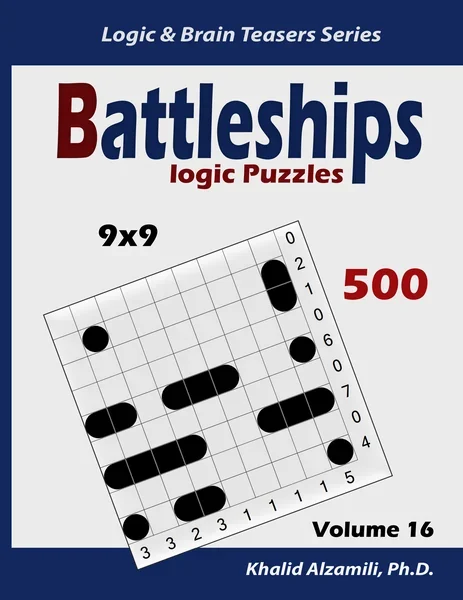
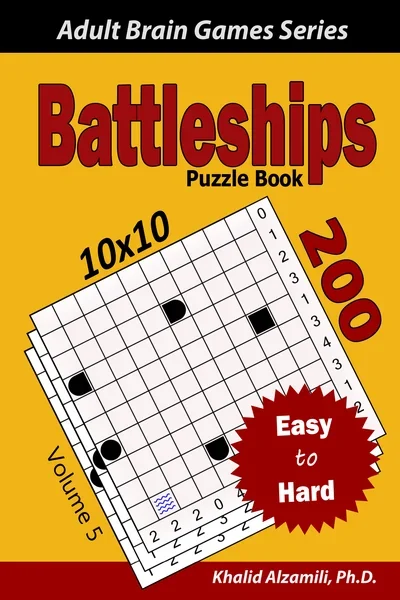
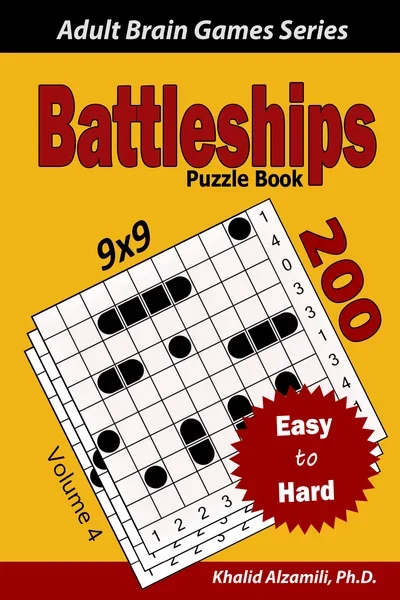
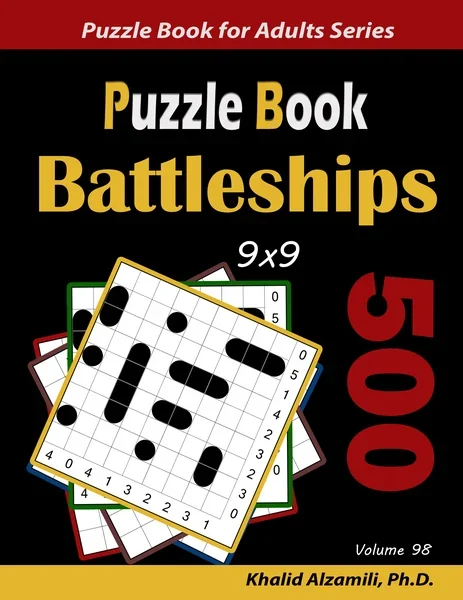
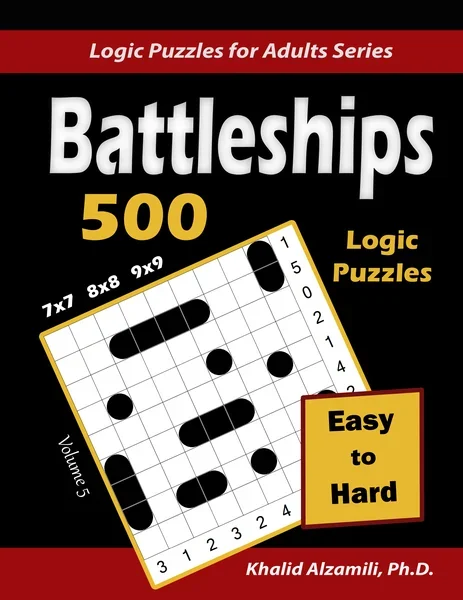
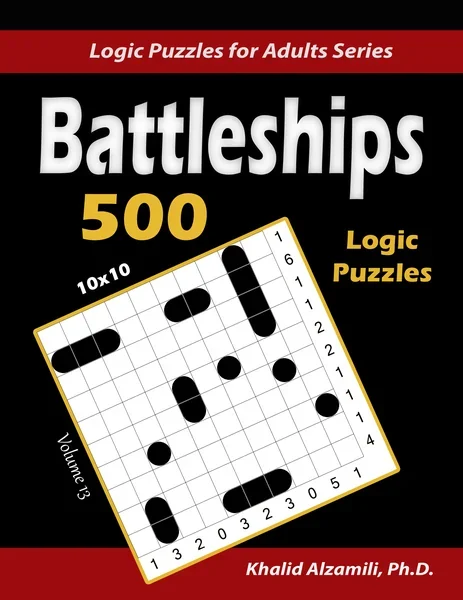
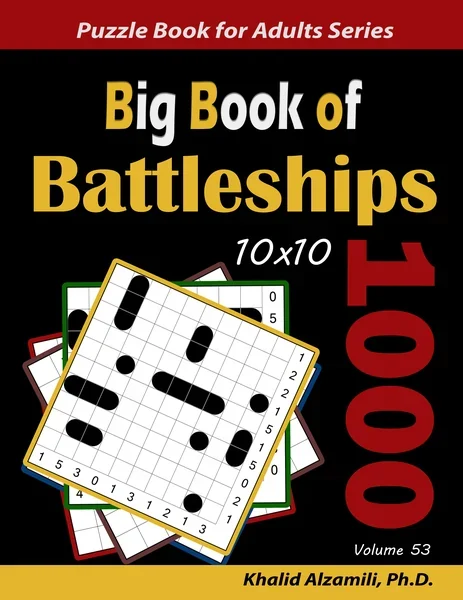
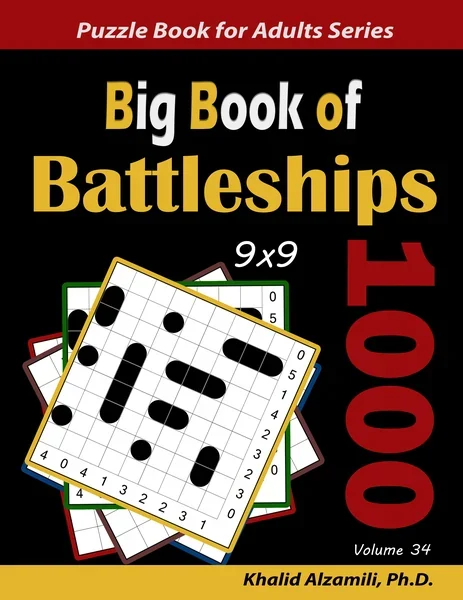
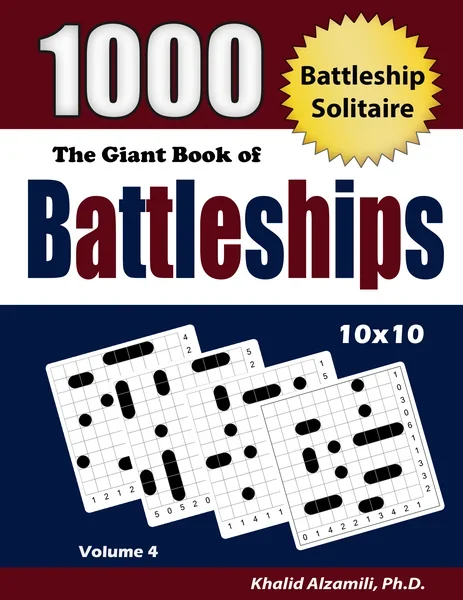
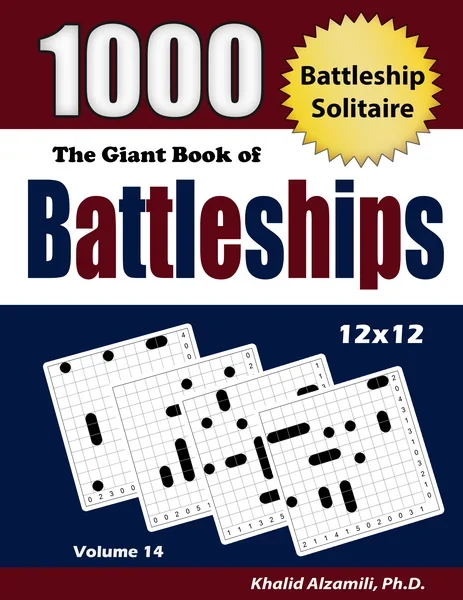
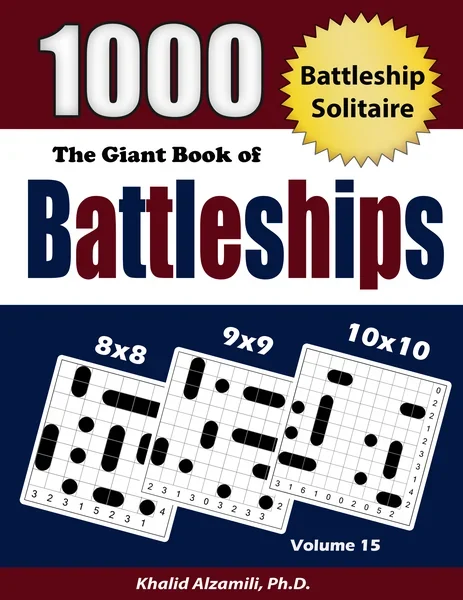
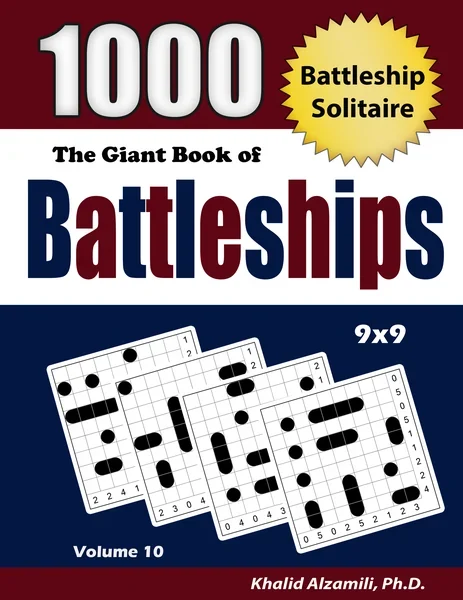
Battleships Puzzle Books

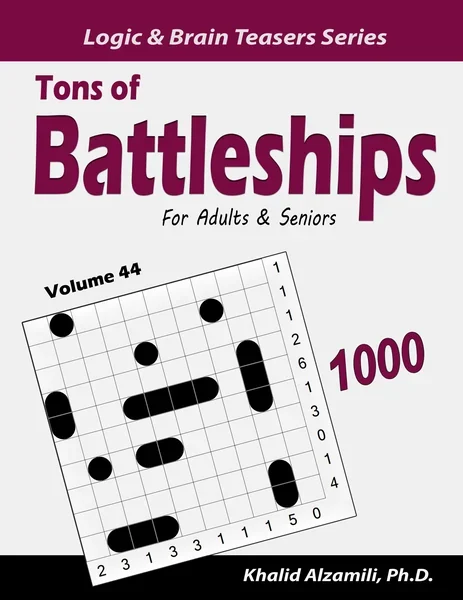
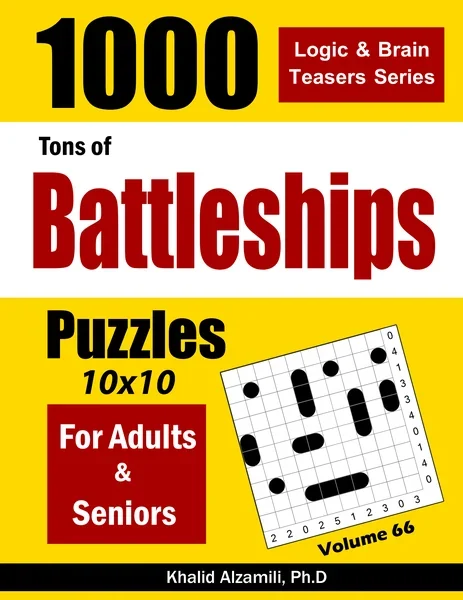
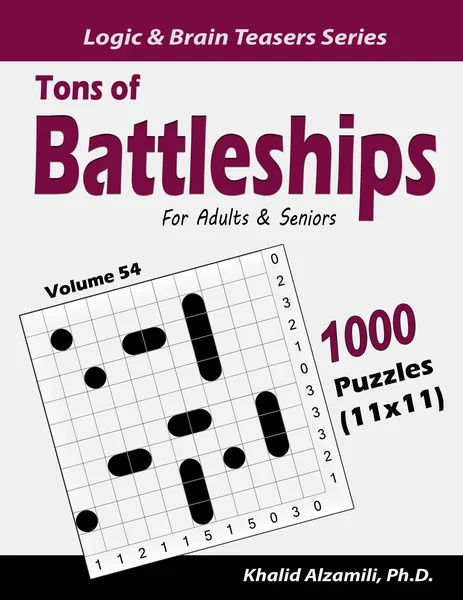
Practice with 44 published Battleships books.