Skip to content

Puzzle Knowledge Center

How to Solve Classic Sudoku

Classic Sudoku is a placement puzzle solved by logic rather than arithmetic.

What Is Classic Sudoku?

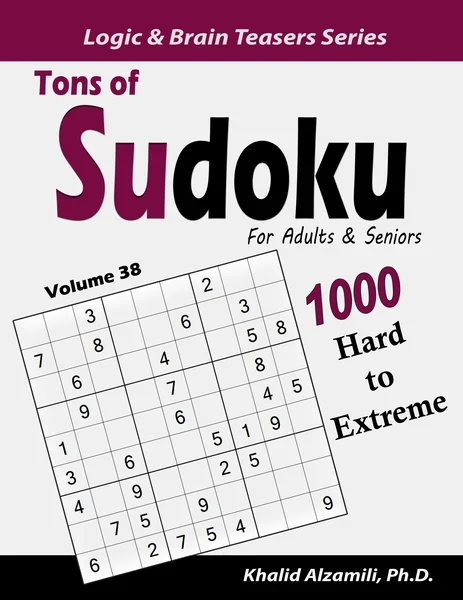
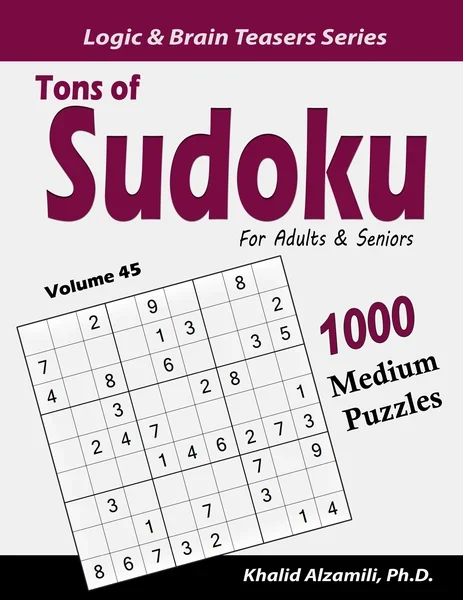
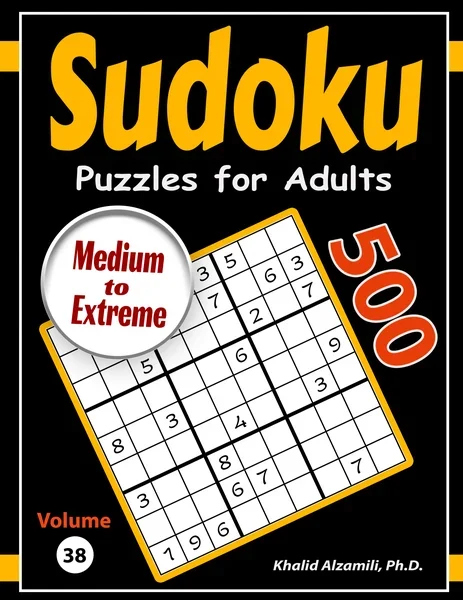
Classic Sudoku is a constraint-satisfaction puzzle played on a 9×9 grid divided into nine 3×3 boxes. The digits are symbols rather than quantities: no calculation is required. A placement is valid only when it satisfies the row, column, and box simultaneously.

A well-formed puzzle has one intended solution that can be reached through logic. Professional solving is therefore not a race to place numbers. It is a disciplined cycle of scanning, recording candidates, locating restricted positions, and verifying the consequences of every deduction.

Rules

  1. Fill every empty cell with one digit.
  2. Each row and each column must contain every permitted digit exactly once.
  3. Each outlined region must also contain every permitted digit exactly once.
  4. In the standard 9×9 format, each 3×3 box contains digits 1–9 once.

Step-by-Step Solving Method

  1. Scan rows, columns, and regions for a digit that has only one possible cell.
  2. Pencil in candidates when a placement is not immediate.
  3. Use singles, locked candidates, and pairs before moving to harder patterns.
  4. After every placement, rescan all affected units.

Professional Strategies

  • Track candidates consistently and remove them only when a rule proves they are impossible.
  • Look for box-line interactions: candidates confined to one row or column inside a box can be removed from the rest of that line.
  • When stuck, switch from cell-based scanning to digit-based scanning across the whole grid.

Common Mistakes to Avoid

  • Guessing before exhausting logical deductions.
  • Checking rows but forgetting the special regions or variant constraint.
  • Leaving stale candidate marks after a placement.

Grid Anatomy and Terminology

Cell
one square that contains a given digit, a solved digit, or candidates.
Unit
any complete row, column, or 3×3 box.
Peer
a cell sharing a unit with another cell.
Candidate
a digit that is not yet excluded from an empty cell.
House intersection
cells shared by a box and a row or column.

Beginner Techniques

  • Full house: eight solved cells in a unit force the ninth digit.
  • Naked single: only one candidate remains in a cell.
  • Hidden single: a digit can appear in only one cell of a unit.
  • Cross-hatching: use placed copies of one digit to eliminate positions in a box.

Intermediate Techniques

  • Locked candidates (pointing): when all candidates for a digit in a box lie on one line, remove that digit from the rest of the line.
  • Locked candidates (claiming): when a line’s candidates for a digit all lie in one box, remove that digit from other cells of the box.
  • Naked and hidden pairs or triples: reserve a small candidate set for the same number of cells, then eliminate it from peers.
  • Box-line reduction: alternate box scans with row and column scans so each deduction feeds the next.

Advanced Strategies

  • X-Wing: if a digit occurs in exactly the same two columns in two rows, eliminate that digit from the rest of those columns; the same logic works with rows and columns reversed.
  • Swordfish generalizes the fish pattern to three rows and three columns.
  • XY-Wing uses three bivalue cells: a pivot XY sees wings XZ and YZ, allowing Z to be removed from cells that see both wings.
  • Coloring and strong-link chains track alternating candidate truths; a contradiction or convergence produces eliminations without guessing.

Systematic Solving Workflow

  1. Scan givens and complete obvious singles.
  2. Enter candidates only after direct placements slow down.
  3. Search each digit across boxes, then across rows and columns.
  4. Inspect pairs, triples, and box-line interactions.
  5. Use advanced patterns only on a clean, current candidate grid.
  6. After every elimination, return to singles; advanced deductions often create simple placements.
  7. Finish by verifying every row, column, and box contains 1–9 exactly once.

Accessibility and Practice

Large-print grids, high-contrast box borders, generous candidate space, and one consistent candidate notation reduce visual load. Solvers with low vision may work one digit at a time and use colored overlays, provided color is not the only signal.

Related Variations

  • Sudoku X adds two diagonal units.
  • Jigsaw Sudoku replaces regular boxes with irregular regions.
  • Killer Sudoku adds arithmetic cages.
  • Samurai Sudoku connects five overlapping grids.

Frequently Asked Questions

Does Sudoku require mathematics?

No. Digits function as nine distinct symbols; the solution depends on placement constraints, not arithmetic.

Should I guess when I am stuck?

For instructional solving, no. Check for missed singles, locked candidates, and restricted sets before using a more advanced pattern.

What are pencil marks?

They are the remaining legal candidates for an empty cell after its row, column, and box are considered.

What is the best technique for beginners?

Repeatedly scan for naked singles, hidden singles, and cross-hatching opportunities.

Why do candidates become inaccurate?

A solved digit or elimination was not propagated to all peers. Update the affected row, column, and box immediately.

How do I improve speed?

Build a consistent scan order and recognize common patterns; speed should follow accuracy rather than replace it.

Editorial Sources

Classic Sudoku Puzzle Books

Practice with 60 published Classic Sudoku books.