Skip to content

Puzzle Knowledge Center

How to Solve Hakyuu / Ripple Effect

Ripple Effect fills outlined rooms with numbers and controls how equal numbers may align.

What Is Hakyuu / Ripple Effect?

Ripple Effect fills outlined rooms with numbers and controls how equal numbers may align.

A reliable solution comes from combining region completeness and distance exclusions. Treat every mark as a deduction that must satisfy all local clues and the puzzle’s global structure.

Rules

  1. A room of n cells contains digits 1 through n exactly once.
  2. If two identical digits n occur in one row or column, at least n cells must lie between them.
  3. Every cell must be filled.

Step-by-Step Solving Method

  1. Complete small rooms first.
  2. Remove candidates already used in a room.
  3. Apply the distance rule in both rows and columns.
  4. Use a placed digit to block the required radius around it.

Professional Strategies

  • Large digits have long exclusion ranges and can constrain distant rooms.
  • Combine room singles with ripple exclusions to form chains.

Common Mistakes to Avoid

  • Applying ordinary row uniqueness instead of the distance rule.
  • Forgetting that room size controls its digit range.
  • Counting the gap incorrectly.

Grid Anatomy and Terminology

Region
a group containing digits 1 through its size.
Ripple distance
equal n values must be more than n cells apart in a line.
Peer at distance
a cell excluded by a placed value.
Region candidate
a value still legal under both rule systems.

Beginner Techniques

  • Complete small rooms first.
  • Remove candidates already used in a room.
  • Apply the distance rule in both rows and columns.
  • Use a placed digit to block the required radius around it.

Intermediate Techniques

  • Large digits have long exclusion ranges and can constrain distant rooms.
  • Combine room singles with ripple exclusions to form chains.
  • Recheck every affected clue after a placement and remove stale candidates immediately.

Advanced Strategies

  • Project every placed number’s full ripple range before scanning regions.
  • Use competing region positions to build distance-based strong links.

Systematic Solving Workflow

  1. Complete small rooms first.
  2. Remove candidates already used in a room.
  3. Apply the distance rule in both rows and columns.
  4. Use a placed digit to block the required radius around it.
  5. Audit unresolved areas for the most restrictive remaining clue.
  6. Verify the completed puzzle against every rule rather than relying on appearance.

Accessibility and Practice

Use high-contrast boundaries, large clues, consistent candidate notation, and symbols that do not rely on color alone. Work in small sections while preserving awareness of global constraints.

Related Variations

  • Ripple Effect is the common English name for Hakyuu.
  • Region shapes and sizes vary across puzzles.

Frequently Asked Questions

What should I do first in Hakyuu / Ripple Effect?

Complete small rooms first.

Should I guess when I am stuck?

No. Recheck the most restrictive clues, candidate notes, and any global connectivity or uniqueness rule before considering a branch.

How should candidates be recorded?

Use a consistent notation and remove a candidate only when a stated rule proves it impossible.

What is the most common mistake?

Applying ordinary row uniqueness instead of the distance rule.

How can I improve at Hakyuu / Ripple Effect?

Practice one technique at a time, review incorrect deductions, and use the same systematic scan order on every puzzle.

How do I verify the final solution?

Check every clue, every completed unit or region, and every global rule independently.

Editorial Sources

Hakyuu / Ripple Effect Puzzle Books

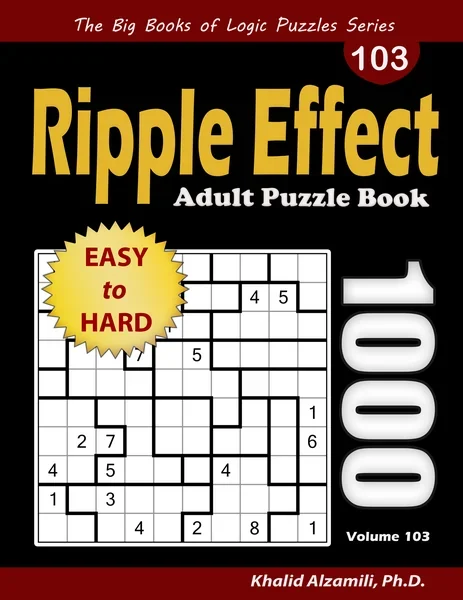
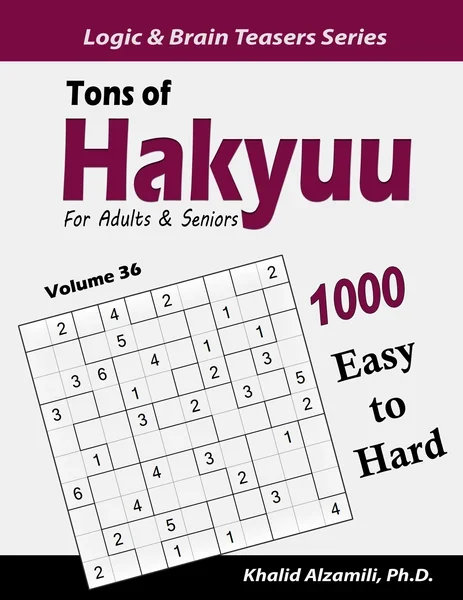
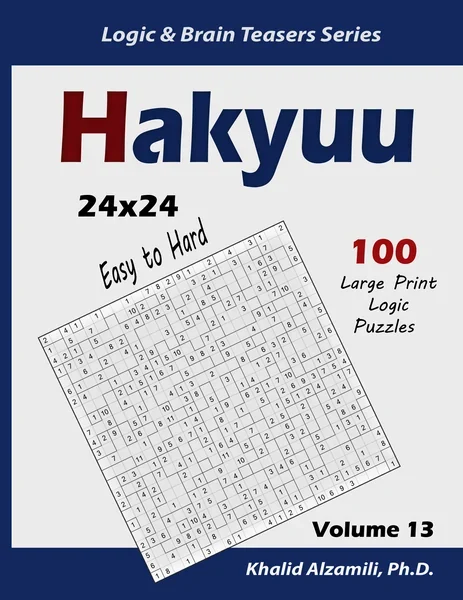
Practice with 3 published Hakyuu / Ripple Effect books.