Skip to content

Puzzle Knowledge Center

How to Solve Jigsaw Sudoku

Jigsaw Sudoku replaces regular boxes with irregular regions while preserving the core logic.

What Is Jigsaw Sudoku?

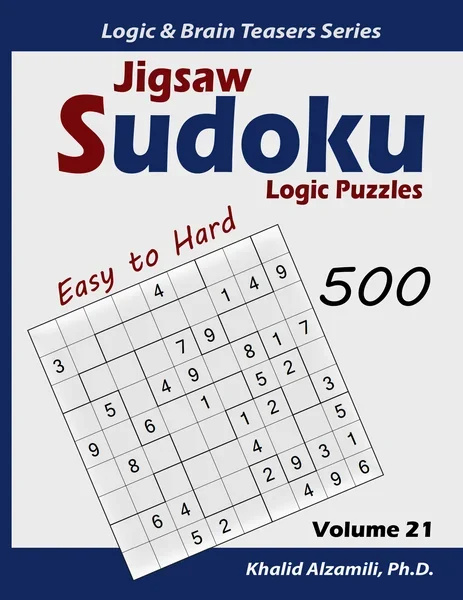
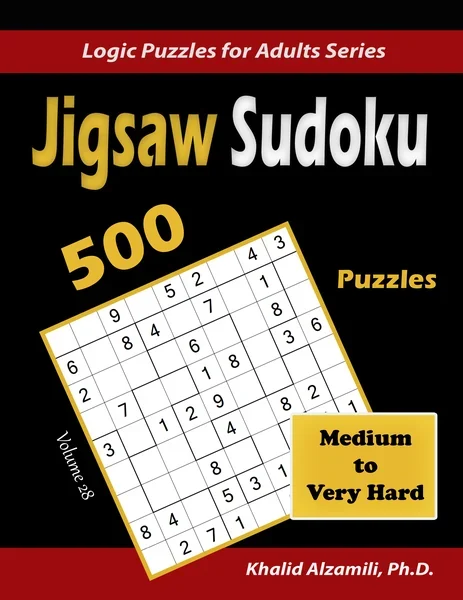
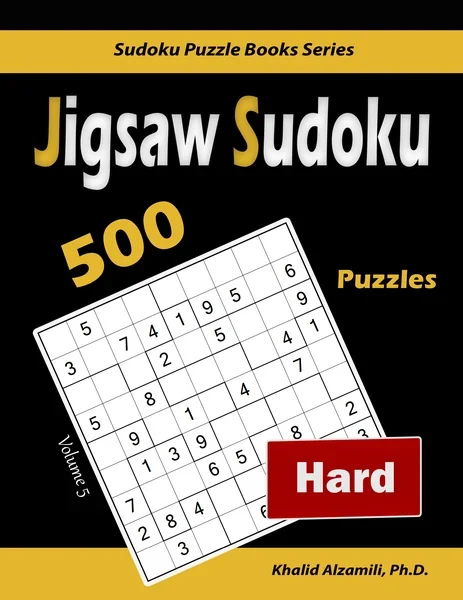
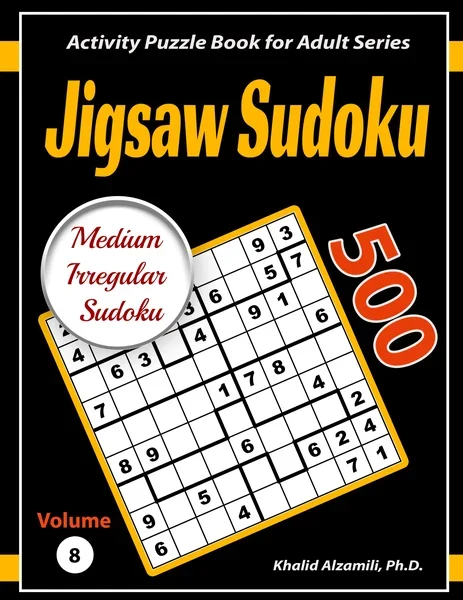
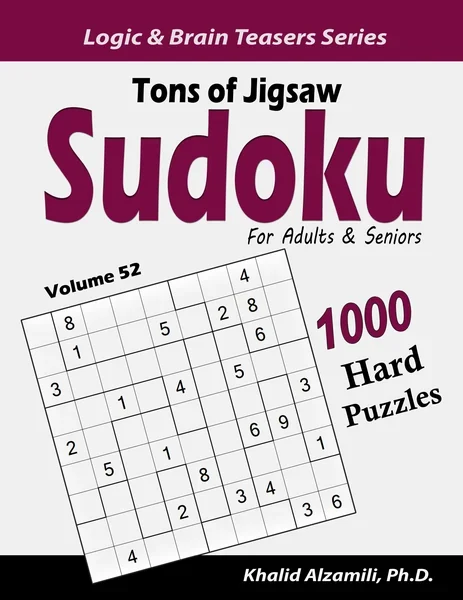
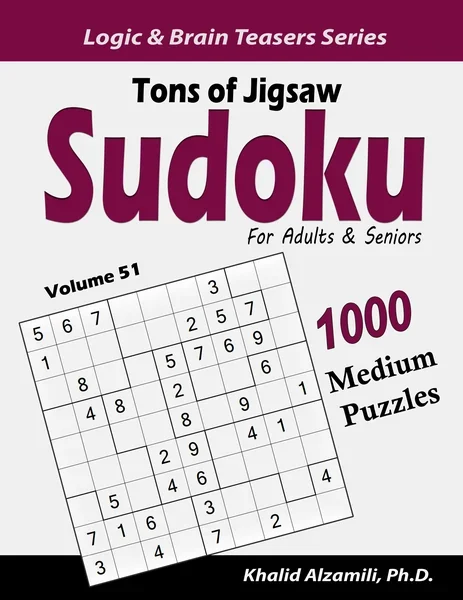
Jigsaw Sudoku, also called Irregular Sudoku, uses the same digits and row-column requirements as Classic Sudoku but replaces the nine rectangular 3×3 boxes with nine irregular nine-cell regions. Every region must contain digits 1–9 exactly once.

The irregular geometry changes how solvers see the grid. Straight visual scanning is less reliable, so professional play begins by tracing region borders carefully. The strongest deductions often occur where a region occupies only a few cells of a row or column.

Rules

  1. Fill every empty cell with one digit.
  2. Each row and each column must contain every permitted digit exactly once.
  3. Each outlined region must also contain every permitted digit exactly once.
  4. Every irregular outlined region contains each permitted digit exactly once.

Step-by-Step Solving Method

  1. Scan rows, columns, and regions for a digit that has only one possible cell.
  2. Pencil in candidates when a placement is not immediate.
  3. Use singles, locked candidates, and pairs before moving to harder patterns.
  4. After every placement, rescan all affected units.

Professional Strategies

  • Track candidates consistently and remove them only when a rule proves they are impossible.
  • Trace region boundaries carefully and use narrow or highly constrained regions as anchors.
  • When stuck, switch from cell-based scanning to digit-based scanning across the whole grid.

Common Mistakes to Avoid

  • Guessing before exhausting logical deductions.
  • Checking rows but forgetting the special regions or variant constraint.
  • Leaving stale candidate marks after a placement.

Grid Anatomy and Terminology

Irregular region
one outlined nine-cell unit.
Region boundary
the heavy line separating units.
Region-line intersection
cells shared by one region and a row or column.
Remote peer
a same-region cell that may be visually distant.
Region map
a mental or marked record of every cell belonging to a region.

Beginner Techniques

  • Count nine cells in every region before solving.
  • Find region hidden singles just as you would box hidden singles.
  • Use row and column givens to eliminate candidates inside a winding region.
  • Trace the full region after every placement so remote peers are updated.

Intermediate Techniques

  • Pointing and claiming still work, but the intersection shape may contain one, two, or several separated-looking cells.
  • Naked and hidden sets can occur in any irregular region.
  • A digit confined to one row segment of a region can be removed from the rest of that row.
  • Regions that touch many rows and columns create useful cross-constraints.

Advanced Strategies

  • Fish, wings, and chains remain valid because rows and columns are unchanged.
  • Region-based strong links may connect cells that are far apart on the page.
  • Almost-locked sets become powerful when an irregular region overlaps several lines.
  • Use boundary-driven scanning: follow one region around its perimeter and test each digit’s remaining locations.

Systematic Solving Workflow

  1. Trace and validate all nine regions.
  2. Solve direct row, column, and region singles.
  3. Scan one digit across all irregular regions.
  4. Apply region-line locks and restricted sets.
  5. Use standard advanced Sudoku patterns with region peers added.
  6. Verify each irregular region explicitly at the end.

Accessibility and Practice

Irregular boundaries should be substantially thicker than cell lines. Region tints may alternate, but a high-contrast outline is essential for color-blind and low-vision solvers.

Related Variations

  • Jigsaw Sudoku X adds diagonal units.
  • Jigsaw Killer Sudoku adds arithmetic cages.
  • Large-format Jigsaw grids may use a different symbol range; the region size defines the permitted symbols.

Frequently Asked Questions

Are there still 3×3 boxes?

No. The irregular nine-cell regions replace them completely.

Must every region be connected?

Standard Jigsaw Sudoku uses connected regions, but always follow the printed outline.

Do Classic Sudoku techniques still work?

Yes, with boxes replaced by irregular regions.

Why are region mistakes common?

A winding region can make nonadjacent cells peers, so its full boundary must be traced.

Can regions have different shapes?

Yes, but in a 9×9 puzzle each standard region still contains nine cells.

What should I scan first?

Start with regions that have many givens or very narrow intersections with rows and columns.

Editorial Sources

Jigsaw Sudoku Puzzle Books

Practice with 46 published Jigsaw Sudoku books.