Skip to content

Puzzle Knowledge Center

How to Solve Minesweeper

Minesweeper uses number clues to locate hidden mines without guessing.

What Is Minesweeper?

Minesweeper uses number clues to locate hidden mines without guessing.

A reliable solution comes from combining neighbor counts, subsets, and safe-cell deductions. Treat every mark as a deduction that must satisfy all local clues and the puzzle’s global structure.

Rules

  1. A number states how many mines occupy its eight neighboring cells.
  2. Marked mines count toward every adjacent clue.
  3. All non-mine cells must be identified safely.

Step-by-Step Solving Method

  1. If a clue already touches its full mine count, mark all other neighbors safe.
  2. If its number equals its remaining unknown neighbors, mark them all as mines.
  3. Compare overlapping clue neighborhoods to find differences.
  4. Repeat deductions after every mark.

Professional Strategies

  • Use subset reasoning between two adjacent clues.
  • Separate certain mines from merely possible mines with distinct marks.

Common Mistakes to Avoid

  • Counting only orthogonal neighbors.
  • Treating a flag as proof when it came from a guess.
  • Failing to update neighboring clues.

Grid Anatomy and Terminology

Clue neighborhood
the eight cells surrounding a number.
Flag
a logically confirmed mine marker.
Frontier
unknown cells adjacent to revealed clues.
Subset
one clue neighborhood fully contained in another.

Beginner Techniques

  • If a clue already touches its full mine count, mark all other neighbors safe.
  • If its number equals its remaining unknown neighbors, mark them all as mines.
  • Compare overlapping clue neighborhoods to find differences.
  • Repeat deductions after every mark.

Intermediate Techniques

  • Use subset reasoning between two adjacent clues.
  • Separate certain mines from merely possible mines with distinct marks.
  • Recheck every affected clue after a placement and remove stale candidates immediately.

Advanced Strategies

  • Subtract overlapping clue neighborhoods to locate mines or safe cells.
  • Separate independent frontier regions and solve their mine totals.

Systematic Solving Workflow

  1. If a clue already touches its full mine count, mark all other neighbors safe.
  2. If its number equals its remaining unknown neighbors, mark them all as mines.
  3. Compare overlapping clue neighborhoods to find differences.
  4. Repeat deductions after every mark.
  5. Audit unresolved areas for the most restrictive remaining clue.
  6. Verify the completed puzzle against every rule rather than relying on appearance.

Accessibility and Practice

Use high-contrast boundaries, large clues, consistent candidate notation, and symbols that do not rely on color alone. Work in small sections while preserving awareness of global constraints.

Related Variations

  • Puzzle editions are designed for deduction rather than random clicking.
  • Some grids use irregular shapes or a stated total mine count.

Frequently Asked Questions

What should I do first in Minesweeper?

If a clue already touches its full mine count, mark all other neighbors safe.

Should I guess when I am stuck?

No. Recheck the most restrictive clues, candidate notes, and any global connectivity or uniqueness rule before considering a branch.

How should candidates be recorded?

Use a consistent notation and remove a candidate only when a stated rule proves it impossible.

What is the most common mistake?

Counting only orthogonal neighbors.

How can I improve at Minesweeper?

Practice one technique at a time, review incorrect deductions, and use the same systematic scan order on every puzzle.

How do I verify the final solution?

Check every clue, every completed unit or region, and every global rule independently.

Editorial Sources

Minesweeper Puzzle Books

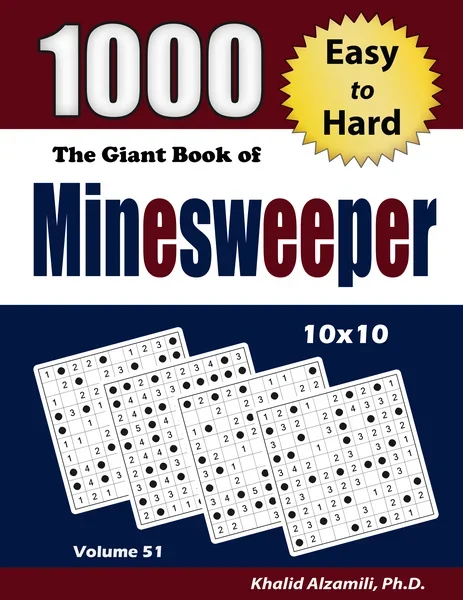
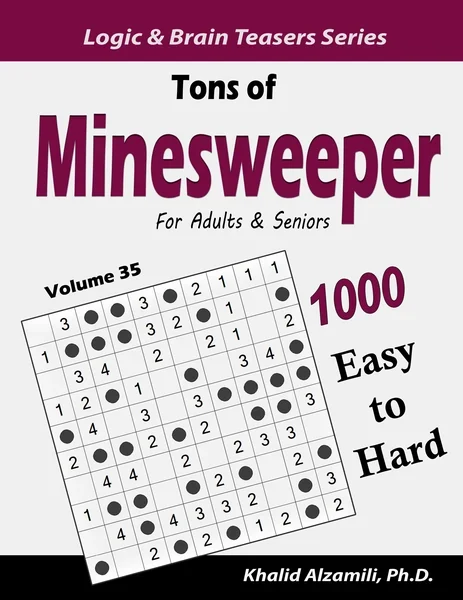
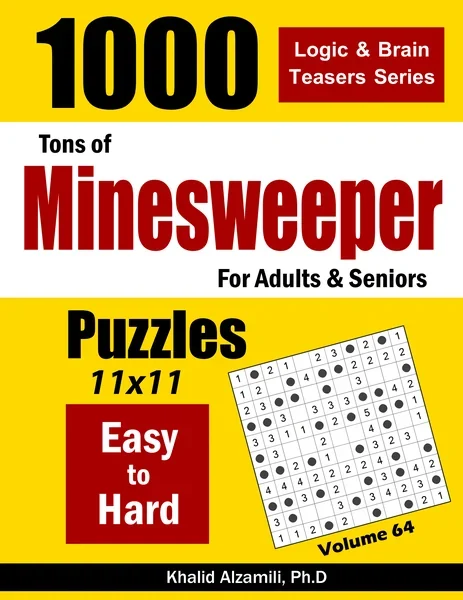
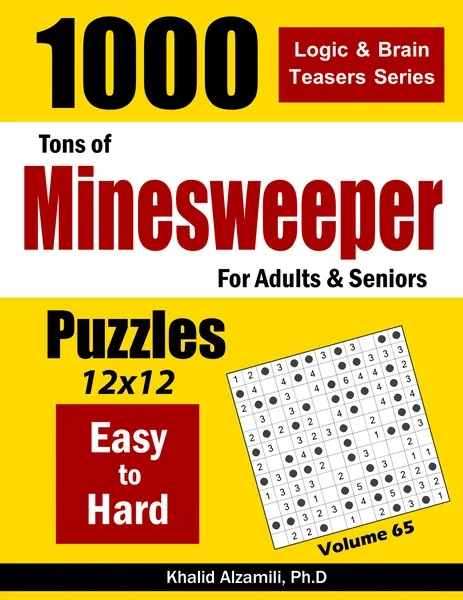
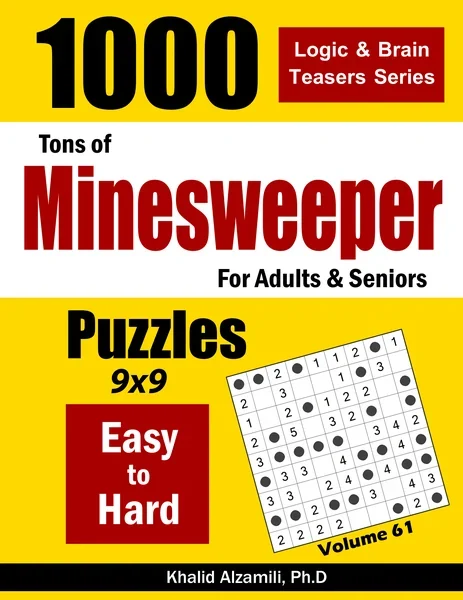
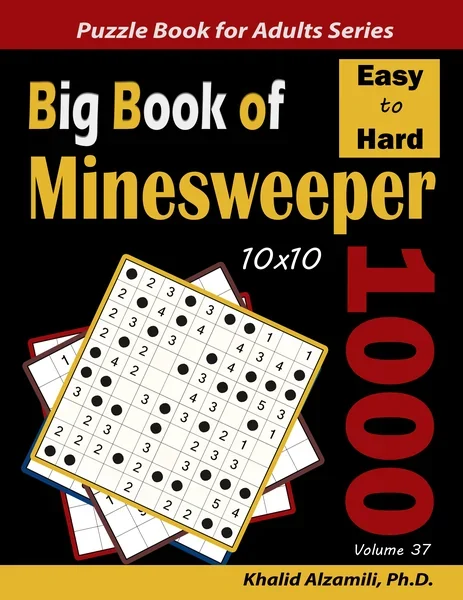
Practice with 19 published Minesweeper books.