Skip to content

Puzzle Knowledge Center

How to Solve Sudoku X

Sudoku X adds two diagonal units to the familiar Sudoku grid.

What Is Sudoku X?

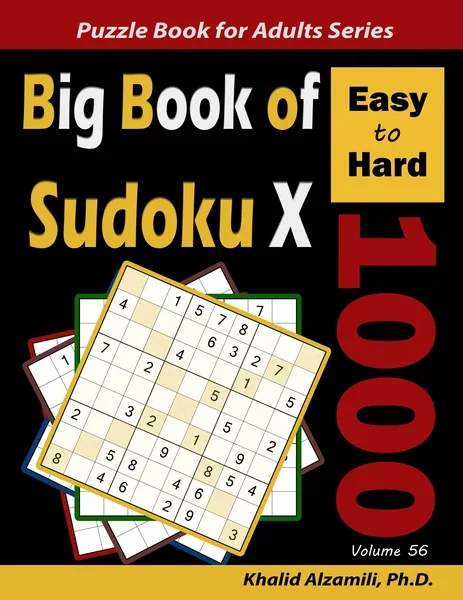
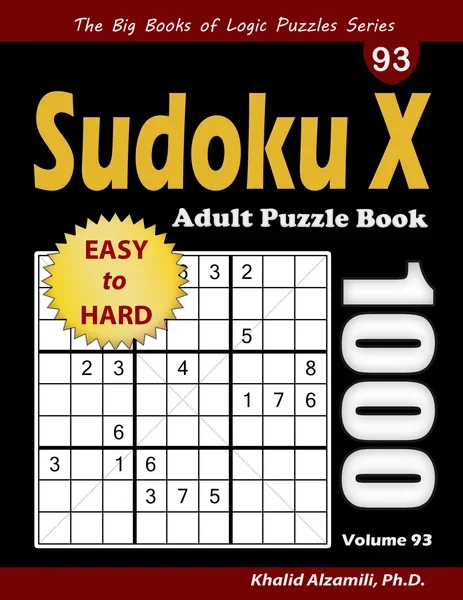
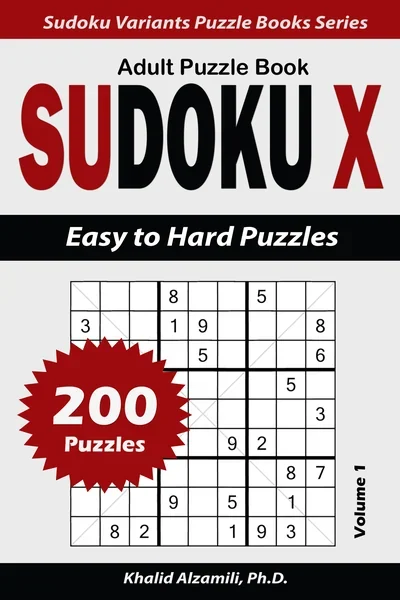
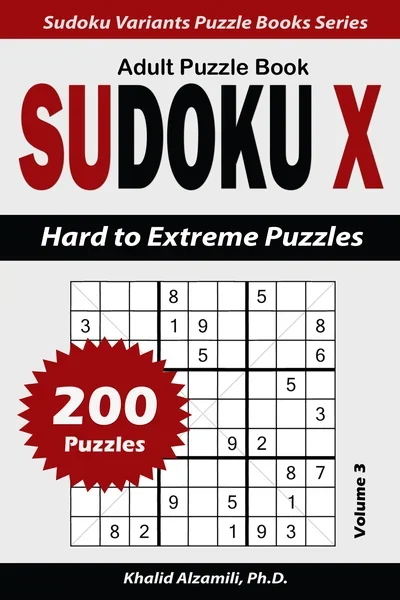
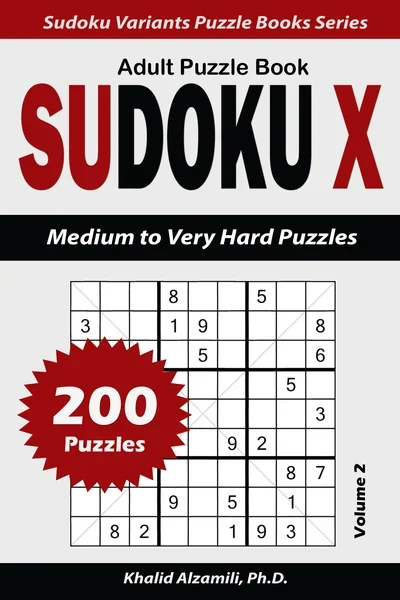
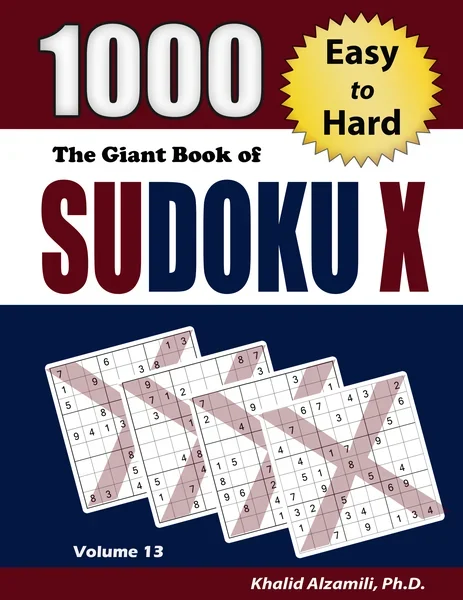
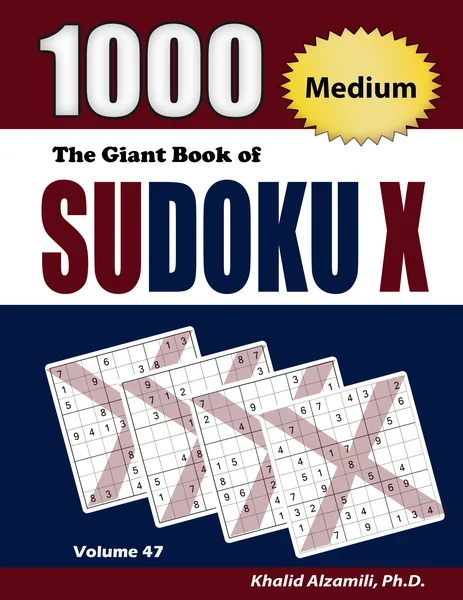
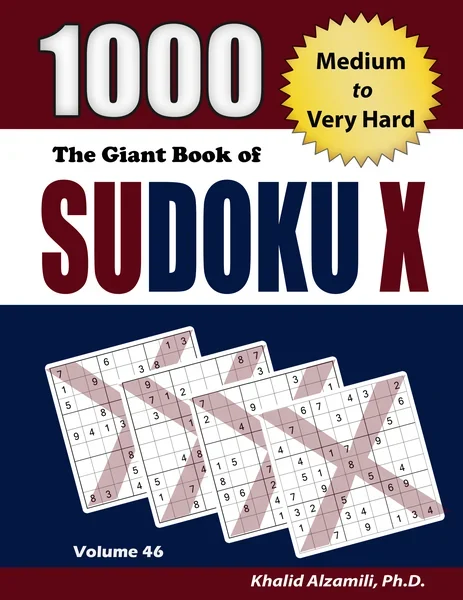
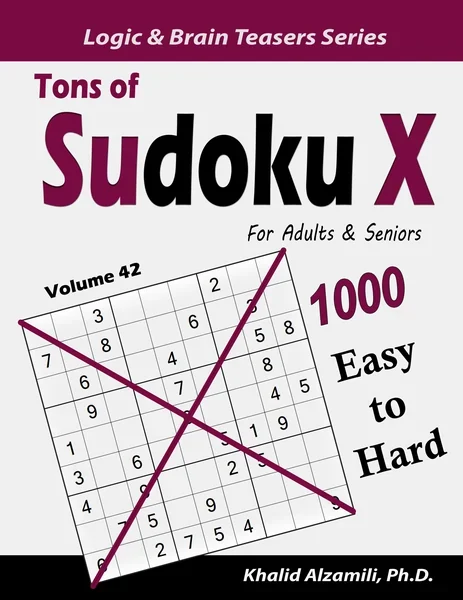
Sudoku X retains every Classic Sudoku rule and adds two long diagonals running from corner to corner. Each highlighted diagonal must contain digits 1–9 exactly once. The grid therefore has two additional units, and the center cell belongs to its row, column, box, and both diagonals.

The diagonals are not decorative. They create extra peers, extra hidden singles, and new interactions with boxes and lines. The most efficient approach is to integrate diagonal checking into the normal scan rather than solving a Classic Sudoku first and applying diagonal rules afterward.

Rules

  1. Fill every empty cell with one digit.
  2. Each row and each column must contain every permitted digit exactly once.
  3. Each outlined region must also contain every permitted digit exactly once.
  4. Both long corner-to-corner diagonals must contain every digit exactly once.

Step-by-Step Solving Method

  1. Scan rows, columns, and regions for a digit that has only one possible cell.
  2. Pencil in candidates when a placement is not immediate.
  3. Use singles, locked candidates, and pairs before moving to harder patterns.
  4. After every placement, rescan all affected units.

Professional Strategies

  • Track candidates consistently and remove them only when a rule proves they are impossible.
  • Treat each main diagonal as another unit when identifying singles, pairs, and candidate intersections.
  • When stuck, switch from cell-based scanning to digit-based scanning across the whole grid.

Common Mistakes to Avoid

  • Guessing before exhausting logical deductions.
  • Checking rows but forgetting the special regions or variant constraint.
  • Leaving stale candidate marks after a placement.

Grid Anatomy and Terminology

Main diagonal
top-left to bottom-right.
Anti-diagonal
top-right to bottom-left.
Diagonal peer
another cell on the same main diagonal.
Center intersection
the central cell shared by both diagonals.
Diagonal-box intersection
diagonal cells contained inside one 3×3 box.

Beginner Techniques

  • List missing digits on each diagonal.
  • Treat a diagonal hidden single exactly like a row hidden single.
  • Remember that a diagonal placement also updates its row, column, and box.
  • Check corner boxes early because each contains three cells from a diagonal.

Intermediate Techniques

  • Use diagonal pairs: two candidates restricted to two cells on one diagonal can be removed from other diagonal cells.
  • Use diagonal-box locking when every diagonal candidate for a digit inside a box is confined to a small intersection.
  • Exploit the center cell, whose unusually large peer set often leaves fewer candidates.
  • Alternate diagonal scans with box scans to propagate restrictions in both directions.

Advanced Strategies

  • Strong links may run along a diagonal and connect to row, column, or box links to form chains.
  • A fish pattern can use ordinary rows and columns while diagonal restrictions remove one of its candidate positions.
  • Forcing chains should include diagonal peers; omitting them produces false branches.
  • On difficult grids, compare candidate distributions on both diagonals before committing to a chain.

Systematic Solving Workflow

  1. Apply all Classic Sudoku exclusions.
  2. Scan both diagonals for missing digits and singles.
  3. Inspect the center and four corner boxes.
  4. Search diagonal pairs and diagonal-box interactions.
  5. Continue with Classic intermediate and advanced techniques using the expanded peer network.
  6. Verify rows, columns, boxes, and both diagonals independently.

Accessibility and Practice

The two diagonals should be indicated by a pale fill or double border while preserving high contrast. A printed X alone may be unclear on small grids; use a legend and never rely on color alone.

Related Variations

  • Some diagonal variants constrain only one main diagonal; confirm the printed legend.
  • Sudoku X can be combined with Jigsaw, Killer, or Samurai layouts, but every added constraint must be stated explicitly.

Frequently Asked Questions

Do both diagonals always contain 1–9?

In standard Sudoku X, yes. Some publications use a one-diagonal variant, so check the legend.

Is the center digit special?

It follows the same digit rules but belongs to both diagonal units as well as its row, column, and box.

Can a digit repeat on a short diagonal?

Yes. Only the two complete corner-to-corner diagonals are constrained unless stated otherwise.

Should I solve it as Classic Sudoku first?

No. Use diagonal exclusions from the beginning because they are part of the puzzle.

Do X-Wings work in Sudoku X?

Yes, but all candidate positions must already respect diagonal constraints.

What is the most common error?

Forgetting to remove a placed digit from other cells on its diagonal.

Editorial Sources

Sudoku X Puzzle Books

Practice with 12 published Sudoku X books.