
Skip to content

Puzzle Knowledge Center

How to Solve Word Search

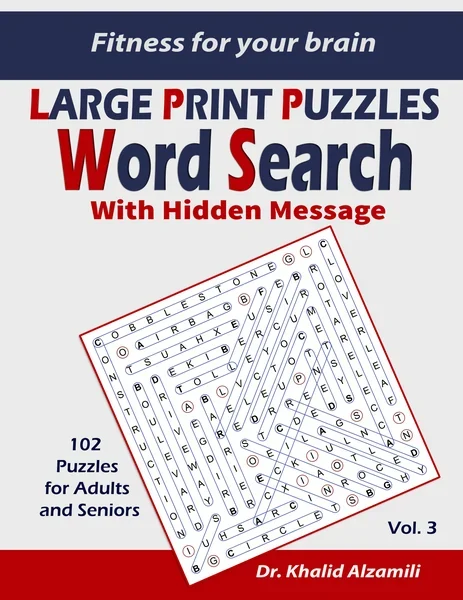
Word Search hides a supplied word list in a letter grid.

What Is Word Search?

Word Search hides a supplied word list in a letter grid.

A reliable solution comes from combining systematic scanning and overlapping word paths. Treat every mark as a deduction that must satisfy all local clues and the puzzle’s global structure.

Rules

  1. Find every listed word in a straight line.
  2. Words may run in the directions allowed by the puzzle, often horizontal, vertical, and diagonal.
  3. Words may be forward or backward when stated.
  4. Letters may be shared by multiple words.

Step-by-Step Solving Method

  1. Search first for rare letters and unusual letter pairs.
  2. Trace each candidate line in both directions.
  3. Cross off a word only after matching every letter.
  4. Use found words to organize the remaining search area.

Professional Strategies

  • Search by word endings as well as beginnings.
  • For long words, locate the rarest internal letter pair before scanning outward.

Common Mistakes to Avoid

  • Assuming diagonals or backward words are allowed without checking.
  • Marking a partial match.
  • Overlooking words that overlap.

Grid Anatomy and Terminology

Word list
the exact targets to locate.
Direction
an allowed horizontal, vertical, or diagonal orientation.
Anchor letter
an uncommon character used to start a scan.
Overlap
cells legitimately shared by multiple words.

Beginner Techniques

  • Search first for rare letters and unusual letter pairs.
  • Trace each candidate line in both directions.
  • Cross off a word only after matching every letter.
  • Use found words to organize the remaining search area.

Intermediate Techniques

  • Search by word endings as well as beginnings.
  • For long words, locate the rarest internal letter pair before scanning outward.
  • Recheck every affected clue after a placement and remove stale candidates immediately.

Advanced Strategies

  • Index rare letter pairs and scan only compatible directions.
  • Track remaining words by length and repeated pattern to reduce rescanning.

Systematic Solving Workflow

  1. Search first for rare letters and unusual letter pairs.
  2. Trace each candidate line in both directions.
  3. Cross off a word only after matching every letter.
  4. Use found words to organize the remaining search area.
  5. Audit unresolved areas for the most restrictive remaining clue.
  6. Verify the completed puzzle against every rule rather than relying on appearance.

Accessibility and Practice

Use high-contrast boundaries, large clues, consistent candidate notation, and symbols that do not rely on color alone. Work in small sections while preserving awareness of global constraints.

Related Variations

  • Some puzzles allow backward and diagonal words; others restrict directions.
  • Themed editions may hide a final message in unused letters.

Frequently Asked Questions

What should I do first in Word Search?

Search first for rare letters and unusual letter pairs.

Should I guess when I am stuck?

No. Recheck the most restrictive clues, candidate notes, and any global connectivity or uniqueness rule before considering a branch.

How should candidates be recorded?

Use a consistent notation and remove a candidate only when a stated rule proves it impossible.

What is the most common mistake?

Assuming diagonals or backward words are allowed without checking.

How can I improve at Word Search?

Practice one technique at a time, review incorrect deductions, and use the same systematic scan order on every puzzle.

How do I verify the final solution?

Check every clue, every completed unit or region, and every global rule independently.

Editorial Sources

Word Search Puzzle Books

Practice with 2 published Word Search books.